Posts

Showing posts with the label privacy

Eric Schmidt Plans to Publicly Defecate, Love-make in Near Future: WSJ

Image
We will always have privacy, Eric Schmidt. I don't care that you led a commission to produce a report that says privacy will 'effectively disappear'. You will still close the door to the bathroom stall when you engage with a toilet. And you'll duck out from the crowd on many other occassions. We've always had privacy and always will have it. ------------------------------------------ Further Reading: Covid-19 Fuels Inequality, Political Divide, Authoritarianism World-Wide, U.S. Intelligence Analysts Say Quadrennial Global Trends report also warns privacy will ‘effectively disappear’ and synthetic media will ‘distort truth and reality’:     wsj.com This work by AJ Fish is licensed under a Creative Commons Attribution-NonCommercial 4.0 International License .
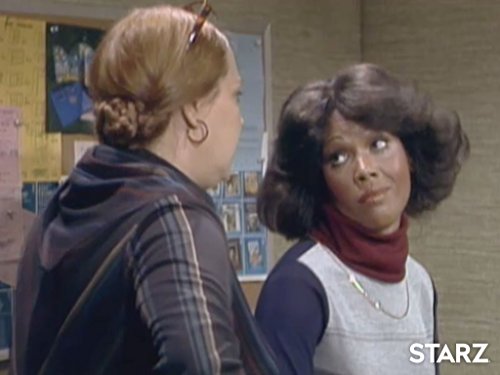

Actress Dubois Brought Privacy Ethics to Fore

Image
"Good Times" character Willona Woods, played by recently deceased actress Ja'net Dubois brought the ethics of spying and importance of privacy to the mainstream culture in the iconic situation comedy. The episode, titled "Willona the Fuzz" aired in 1977. The episode opens with Willona recounting to her family that day's exciting sting operation in which, while shopping on her lunch break, she caught a department store shoplifter and was awarded $50 and a job offer working part time in store security. Of course she turned down the job, she tells her family with Dubois' signature panache, as "I ain't no spy." But Willona reconsiders the spy-for-hire offer when her adopted tween Penny (played by precocious Janet Jackson) asks for ice skating lessons and calls her "mom" for the first time. Willona next returns to the store's manager and asks him for the job she rejected the previous day. From then on middle management sweeps he...

U.S. Supreme Court 'Stop and Frisk' Opinion Parallels Privacy Harms Paper

Image
Supreme Court Justice Sonia Sotamayor wrote a dissenting opinion on the policy of "Stop and Frisk" police practices -- introduced by mayors such as Michael Bloomberg, who is now running for president -- that was so persuasive it was published as part of a literature compilation by 826 National (Dave Eggers' group.) The compilation is called " The Best American Nonrequired Reading 2017 ". Privacy harms, the harms of being watched are very hard to articulate. Even the top privacy legal scholars struggle to make the case that being surveilled make a concrete difference in the lives of the middle class. One attempt was made by the two most famous privacy law scholars right now, Danielle Citron and Daniel Solove, who co-authored " Risk and Anxiety: A Theory of Data Breach Harms ". I've read a lot of privacy law literature and I would not rate that paper as one of my favorites. However, it did illustrate what a struggle it is to put privacy *and* securi...

Orwell Explains Students' Writing Fears

Image
I've been tutoring high school AP English students and notice they all fear writing a sentence in front of me. I'm trying to internally time-travel back to the age I was when I first cleared the fear-hurdle of committing something to a paper that could be handed in to a despotic teacher. The writer George Orwell said totalitarianism was deadly to literature . "Even a single taboo can have an all-round crippling effect upon the mind, because there is always the danger that any thought which is freely followed up may lead to the forbidden thought. It follows that the atmosphere of totalitarianism is deadly to any kind of prose writer.” I had the scariest teachers in sixth grade who criticized what we handed in as not what was assigned. They would rant in front of the entire class. I was criticized for an assignment my parents had actually helped me write, probably the only time they helped me with my homework. The above pullquote is from Masha Gessen's New Yorker arti...

EFF Champions State Privacy Laws in CA, VT, IL, DC, etc.

Image
The Electronic Frontier Foundation penned a letter to Congress this month asking them *not to pass federal privacy laws* of a certain type. "We will oppose federal legislation that preempts stronger state laws" the foundation said. Among the individual state privacy laws that have already passed, are: The California Consumer Privacy Act , which provides consumers with the "right to know" what personal information a company has collected about them; the right to delete that information; the right to opt-out of the sale of that information ; and the right to receive equal service and pricing from a company. The law passed and will be effective in 2020. The Illinois Biometric Information Privacy Act , which allows consumers to decide for themselves whether it is in their best interest to share their biometric information with companies. The Vermont Data Broker Act , which protects consumers from the fraudulent collection of their data and from their data being u...

Interviewers, in Asking "Do Most People Care" About Privacy, Imply They Don't

Image
It takes a person in a position of strength to say privacy matters, because it's a built-in cognitive fallacy to perceive a person who does so as either someone with something to hide , or neurotic. Without broader cultural knowledge of a privacy framework, such as GWU law professor Solove's four-part privacy taxonomy , the necessity of privacy is a slow case to build in the public's mind, and can be easily rolled back in one day of favorable trading on the stock market. Such was the case for Facebook (FB) this week when a business reporter took a sound premise and before our eyes, with rapid questioning led the viewer to draw a faulty conclusion which quickly was re-purposed into a sound-looking yet faulty premise from which to draw more conclusions. Bloomberg TV's Emily Chang, being a reporter on investment television, may not admit privacy matters because investors want growth and brawn in their stock market news, not neurotic concerns about privacy. Chang impl...

Is Privacy or Surveillance The Issue? A Link Roundup

Image
Which is the bigger priority for our society - privacy or surveillance? In other words, is "privacy" important because a) lack of privacy does harm to a person, or b) surveillance conducted by institutions corrupts the ones doing the spying? In the table below we lay out article quotes and recent anecdotes, and list whether it was more illustrative of the importance of privacy or the corrupting powers of surveillance. Getting these fleshed out is important. As Solove says in his widely cited paper 'I've Got Nothing to Hide', and Other Misunderstandings of Privacy , "In many cases, privacy issues never get balanced against conflicting interests because courts, legislators, and others fail even to recognize that privacy is implicated. It is therefore of paramount importance that we continue to work on developing a conception of privacy." Solove indeed developed a fine four-part conception of the harms resulting from lack of privacy in said paper. And the...

A Privacy Taxonomy by Daniel Solove

Image
At the bottom of this post is a "Privacy Taxonomy" created by Daniel Solove, a law professor. He defined these terms in his widely cited paper " 'I've Got Nothing to Hide' and Other Misunderstandings of Privacy " published July 2007. Readers wanting to skip past the introduction can jump to the guts of the four-part framework from here: I. Information Collection Surveillance , Interrogation II. Information Processing Aggregation , Identification, Insecurity, Secondary Use III. Information Dissemination Breach of Confidentiality , Disclosure, Exposure, Increased Accessibility, Blackmail , Appropriation, Distortion IV. Invasion Intrusion, Decisional Interference --- "Why do you need privacy? Do you have something to hide? " "I don't have anything to hide. But I don't have anything I feel like showing you, either." "If you have nothing to hide, then you don't have a life." "Show me yours, an...

*Complete Control, Feeling Safe, Being Safe (Facebook)

Image
(* Denotes one bliki appendage, below .) A transcript of Senator Deb Fischer (R-Nebraska) questioning Facebook founder and CEO Mark Zuckerberg April 10 shows questions and answers over how much a user is able to control their data, and whether a private user was exposed. (A New York Times story today on Facebook, found the company sharing users' data, and users' friends' data, with 60 device manufacturers .) The c-span clip is six minutes long, here . Fischer: Thank you Mr. Chairman, thank you Mr Zuckerberg for being here today, I appreciate your testimony. The full scope of Facebook users' activity can print a very personal picture I think. And additionally you have those two billion users that are out there every month and so we all know that's larger than the population of most countries. So how many data categories do you store, does Facebook store, on the categories that you collect? Zuckerberg: Senator can you clarify what you mean by data categories . F...